
MyBaby Unwind logo

Let's Find Out Why.

Because "they'll grow out of it" isn't good enough.

You Found Us.

That's the First Step.

Maybe your midwife or lactation consultant sent you here. Maybe you were up at 2am Googling why your baby won’t stop crying, why feeding hurts, why nothing is working, and you found us that way.

Either way, you’re here. And we’re glad.

Whatever you’re going through with your baby right now, we have almost certainly heard it before. The sleepless nights, the painful feeds, the feeling that something is off but nobody can tell you what. This is exactly what we do. And we can help.


Not sure where to begin?

Where Do You Start?

Most families start with a craniosacral therapy assessment. But not always. Depending on what your baby is experiencing, it may make more sense to see our occupational therapist, physiotherapist, or feeding therapist first, and layer in craniosacral therapy from there.

Here’s why that matters. If your baby has a tongue restriction that is affecting their latch, starting with a feeding assessment gives us a clearer picture of what the mouth and tongue are actually doing before we begin releasing tension in the body. If your baby is missing milestones, an OT assessment tells us exactly where the gaps are so CST can support the right areas. The order of care is not one size fits all. It depends on your baby.

Not sure which way to go? Call our front desk and tell us exactly what your baby is struggling with. We’ll point you in the right direction before you book a single appointment.

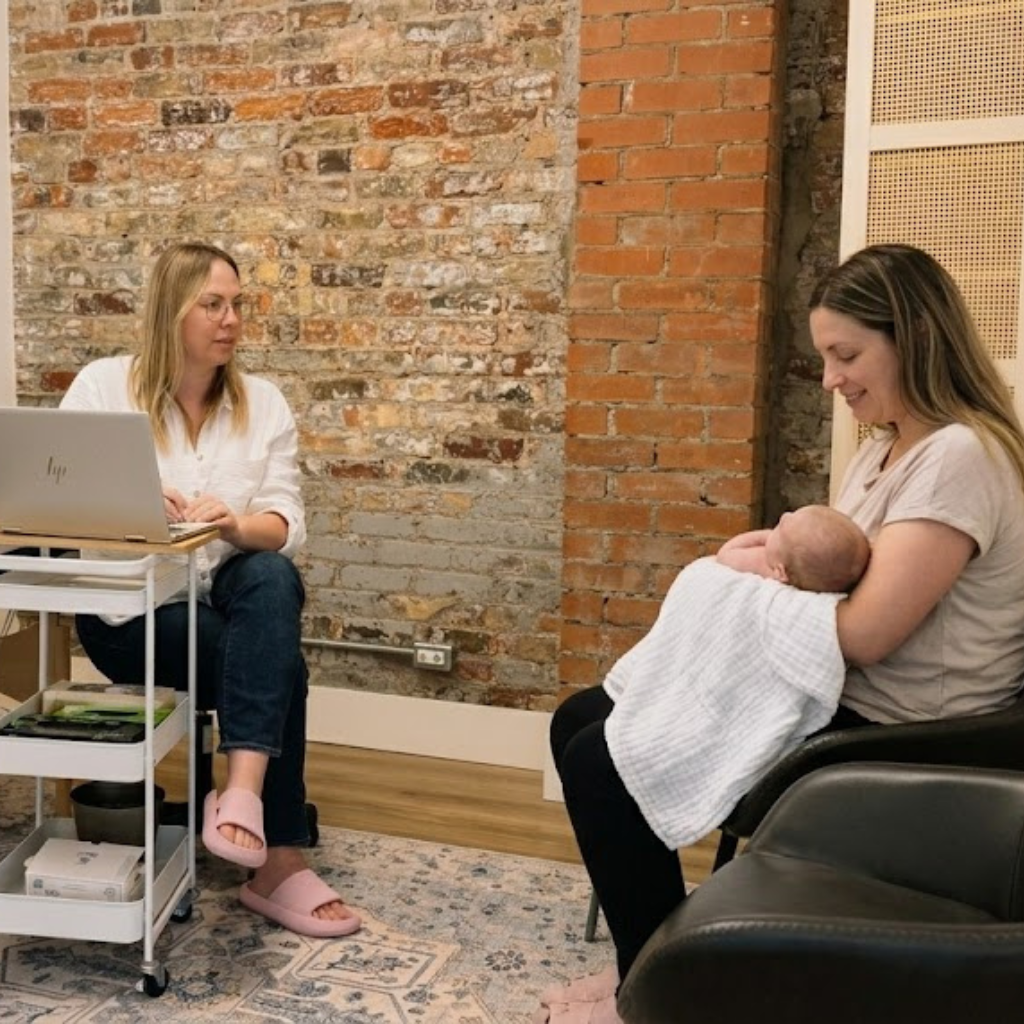
Andrea Chance and Meaghan Beames
Better together

CST Works Best as Part of a Team

Craniosacral therapy is powerful on its own. But it’s designed to work alongside other care, and that’s where the real shift happens.
When we release tension in your baby’s body through CST, we’re creating the conditions for every other type of care to work better.

 Physiotherapy can address range of motion more effectively when the underlying fascial tension has already been released. Lactation support lands differently when the jaw, neck, and craniosacral system are no longer holding compensation patterns. Feeding therapy builds on a foundation that CST helps establish.

Think of CST as clearing the path. Everything else moves further, faster, because the body is ready to receive it.

Your First CST Appointment

What to Expect

Your first appointment starts with a full health history and birth story intake. We want to hear everything before we begin. From there, your practitioner will do a gentle assessment and start treatment in the same visit.

We typically work inside the mouth. This helps with feeding, sucking, and oral function, and is one of the most important parts of what we do with babies.

Your baby does not need to be still. They can be feeding, moving, resting on your lap, or lying on a soft surface. Whatever they need, we work around it.

After the session, you may notice your baby turning their head more easily, feeding with less fussiness, or passing gas without straining. Every baby responds differently, and that is okay.

Sometimes babies cry during treatment. This does not mean they are in pain. The techniques are very gentle. It means they are releasing something, and that is exactly what we are here for. Your comfort and your baby’s comfort are always our first priority.

Craniosacral Therapy can be done while babies are feeding, sleeping, playing, or during a diaper change.

Have some concerns?

What we can help with:

Babies who are struggling with the symptoms below often see improvements within a few sessions

How It Works

Why Gentle Works

Parents often ask us how something this light can actually do anything. It’s a fair question. When you’re used to thinking of treatment as something you can feel, 5 grams of pressure, about the weight of a nickel resting on your skin, doesn’t feel like much.

But a baby’s body is not an adult body. The tissues are soft. The nervous system is open and responsive. And the tension we are working with is not deep in the muscle. It lives in the fascia, the connective tissue that wraps around everything inside your baby’s body. Fascia responds to light touch. It doesn’t need force.

When we find a place that is tight and hold it with gentle, sustained pressure, the tissue softens. The body recognizes it is safe to let go. That release is what changes how your baby feels, how they move, and how they feed.

infant lying down during CST session
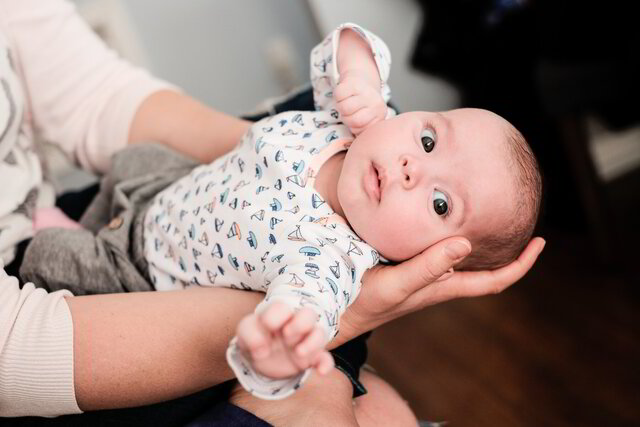
infant being held during CST session
CST History

The science behind the techniques

This treatment was developed by Dr. John E. Upledger, an Osteopathic Practitioner. Through his extensive research at Michigan State University and many years of clinical testing, Upledger found that using as little as 5g of pressure was enough to release tissues from head to toe, thus allowing the body to move freely and promote healing.

Since the techniques are so incredibly gentle, they are even safe for infants to receive.

Imagine your baby calm while feeding! What a beautiful world that would be.

Benefits

Results vary from baby to baby, but just one treatment may relieve them of quite a few of their symptoms.

Benefits may include easier weight gain, elimination of ear infections, elimination of reflux symptoms, or longer stretches of sleep.

Most babies experience noticeable results immediately – have a deeper, less painful latch; stop clicking while feeding; or have a noticeable change in head-shape. Often it takes only 2-5 treatments to resolve the major issue of concern.

infant sleeping

Post-treatment

There may be an increase of sleepiness after the treatment, fussiness for a few days following, or no change at all. If no changes have been observed, it may be beneficial to receive another treatment, or switch practitioners for the next treatment. Sometimes an area needs to be released and integrated into the body after a good, long sleep (or perhaps a few days worth of naps) before the core issue can be addressed at the next treatment.

All Stages of Life

CST successfully addresses many of the issues that may arise for babies, toddlers and into childhood. Craniosacral is for everyone! Think about CST after a fall, surgery, sports injury, attention difficulties in school, learning troubles and other events that affect a child’s health and well-being. After a few treatments, parents are able to see noticeable results. It also gives children a chance to become more in-tune with their own body.

Try this

Can't get an appointment yet?

This massage will help a baby poop easily, and feel more comfortable when feeding.

We're here to help